
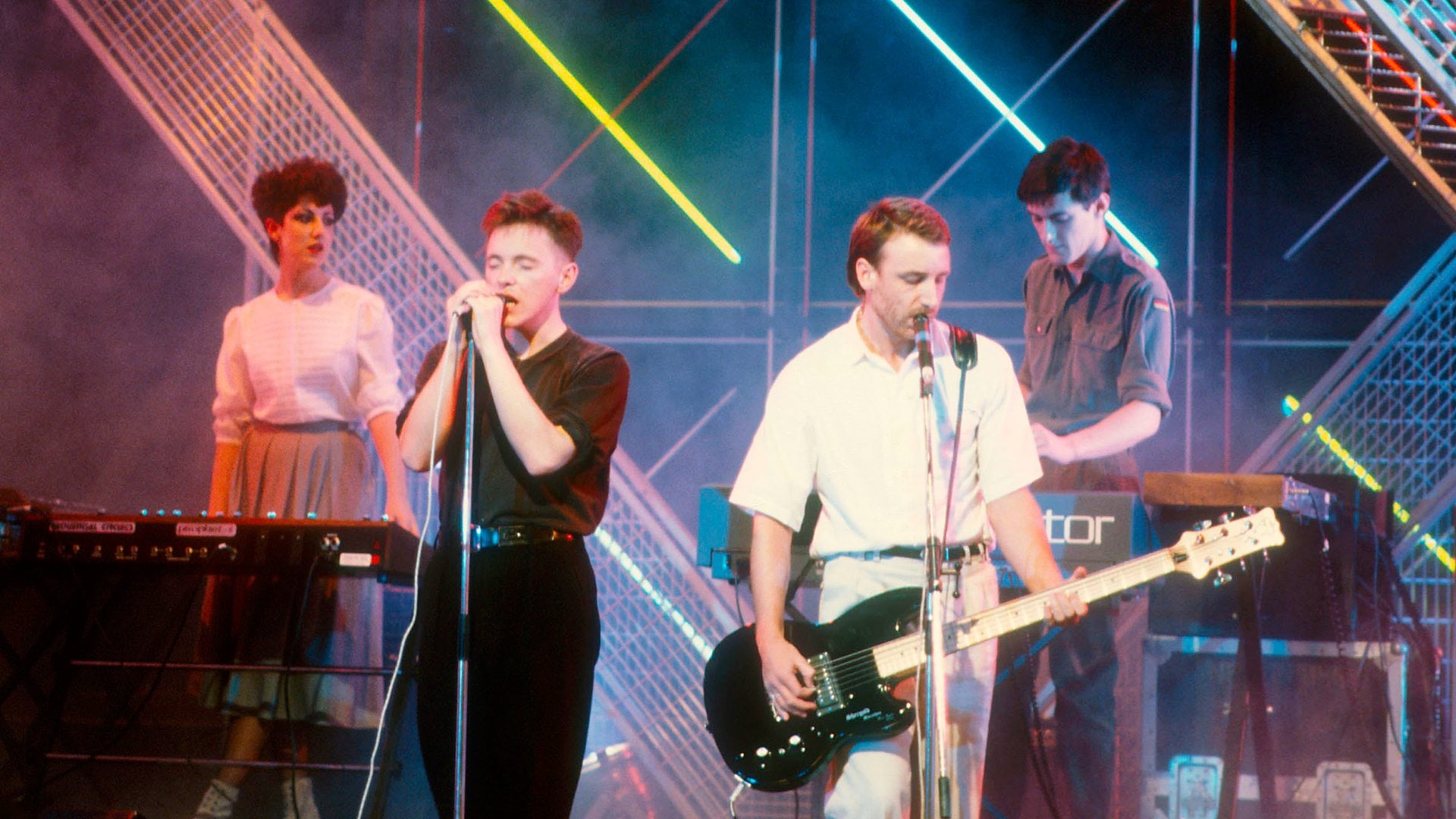
New Order is one of the most influential and pioneering bands in the history of dance music. Formed in 1980 in Manchester, UK, following the breakup of Joy Division after the tragic death of lead singer Ian Curtis. New Order carried on the post-punk sound of Joy Division but added electronic beats and synthesizers, creating a unique and innovative sound that would go on to influence countless bands in the years to come.
New Order’s early music fused the punk and post-punk sound of Joy Division with the upbeat and danceable rhythms of electronic music. This resulted in a sound that was both dark and moody, but also energetic and uplifting. The band’s use of electronic instruments, such as drum machines and synthesizers, helped to pave the way for the emergence of dance music in the 1980s.
New Order’s 1983 hit “Blue Monday” is often considered one of the greatest dance tracks of all time. The song featured a driving, pulsing beat that was heavily influenced by disco and funk, but also had a futuristic edge that was uniquely New Order. The song’s success helped to cement New Order’s place in the pantheon of dance music, and the band continued to produce hit dance tracks throughout the 1980s and 1990s.
Beyond their musical contributions, New Order’s impact on dance culture also extends to their iconic album artwork and music videos, which often featured bold and striking visuals that were heavily influenced by the art and design movements of the time. The band’s use of avant-garde imagery and design helped to elevate dance music from a niche genre to a mainstream cultural phenomenon.
Overall, New Order’s fusion of punk, post-punk, and electronic music helped to shape the sound of dance music and paved the way for the emergence of electronic dance music (EDM) in the 1990s and beyond. Their innovative use of electronic instruments and their unique blend of genres have made them one of the most influential and iconic bands in the history of dance music.
Manchester’s Musical Heritage
New Order played a crucial role in the Manchester music scene of the late 1970s and early 1980s. The band emerged from the ashes of Joy Division, one of Manchester’s most influential post-punk bands. After the tragic death of Joy Division’s lead singer Ian Curtis in 1980, the remaining members, including Bernard Sumner, Peter Hook, and Stephen Morris, decided to form a new band with a new sound.
New Order’s music was influenced by a variety of genres, including punk, post-punk, electronic, and dance music. The band’s unique sound helped to define the Manchester music scene, which was characterized by a mix of alternative and experimental music.
Manchester’s music scene was fueled by a number of factors, including the city’s history of industrial decline and economic hardship. The city’s working-class youth, who had been hit hard by high unemployment rates and the decline of the manufacturing industry, found solace in the city’s music scene. Manchester’s clubs and music venues provided a space for these young people to come together and express themselves through music and dance.
New Order was at the forefront of this scene, playing regularly at local clubs like The Hacienda and releasing a string of successful singles and albums. The band’s success helped to put Manchester on the map as a hub for alternative music, and inspired a new generation of musicians and fans.
New Order’s impact on the Manchester music scene can still be felt today. The city’s musical legacy, which includes bands like Joy Division, The Smiths, and Oasis, continues to inspire and influence musicians around the world. New Order’s unique sound and innovative use of electronic instruments helped to pave the way for the emergence of dance music in the 1980s and 1990s, and their influence can still be heard in the music of contemporary artists like The xx and LCD Soundsystem.